
Spinning Kit
Hand spinning is a wonderfully meditative and rewarding craft. Don't worry if it feels awkward at first; practice makes perfect!
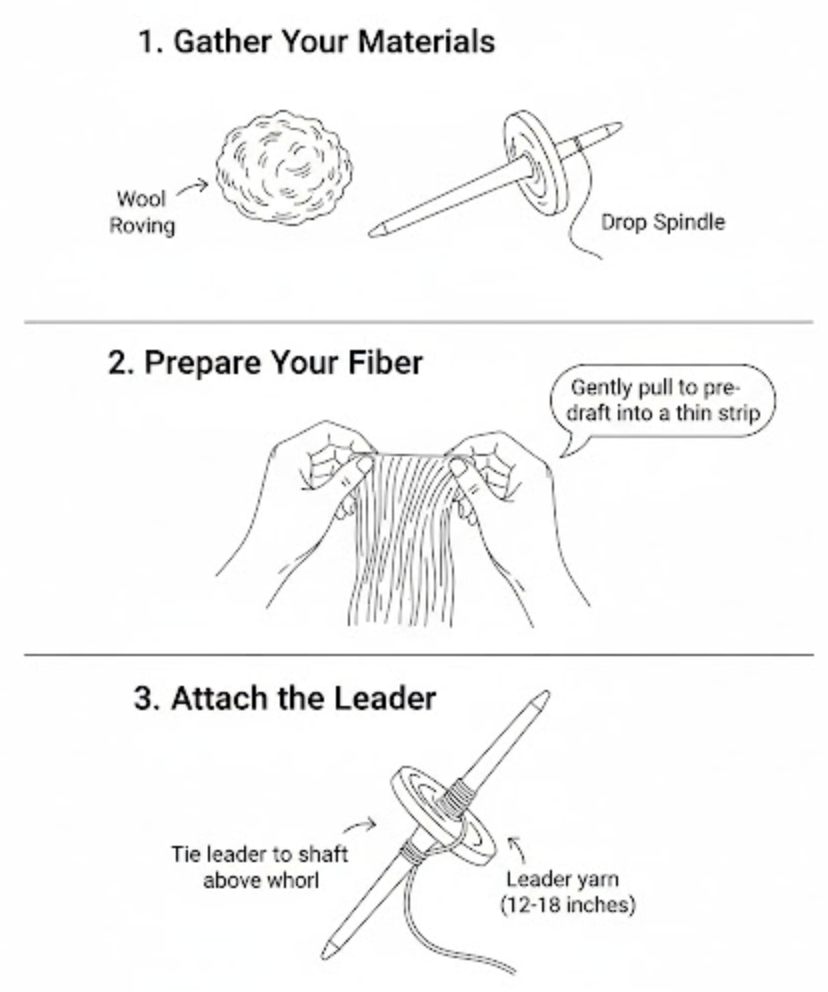
1. Gather Your Materials
You'll need a drop spindle and some fiber. Wool roving is a great choice for beginners because it drafts easily.
2. Prepare Your Fiber
Take a small section of your fiber. Gently pull it apart a little to pre-draft it, making it easier to work with. You want a consistent, thin strip.
3. Attach the Leader
You'll need a "leader" — a short piece of yarn or string (about 12-18 inches). Tie one end of the leader to the shaft of your spindle, just above the whorl.
4. Create a Slip Knot
Take the free end of your leader and make a slip knot. This knot will allow you to easily attach your fiber and remove it later.
5. Attach Your Fiber to the Leader
Place the end of your pre-drafted fiber into the slip knot and gently pull the knot snug around it. Don't make it too tight!
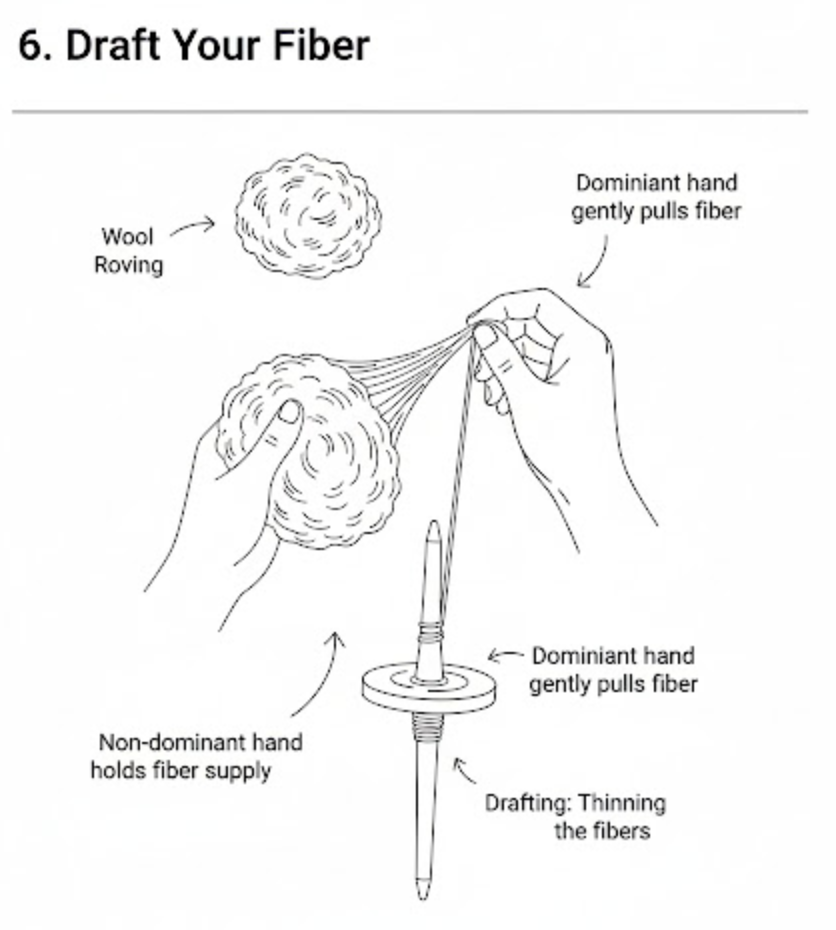
6. Draft Your Fiber
Hold your fiber supply in one hand (your non-dominant hand usually works best for this). With your dominant hand, gently pull a small amount of fiber from the main supply. This is called "drafting." You want to pull just enough so the fibers are thin but still connected.
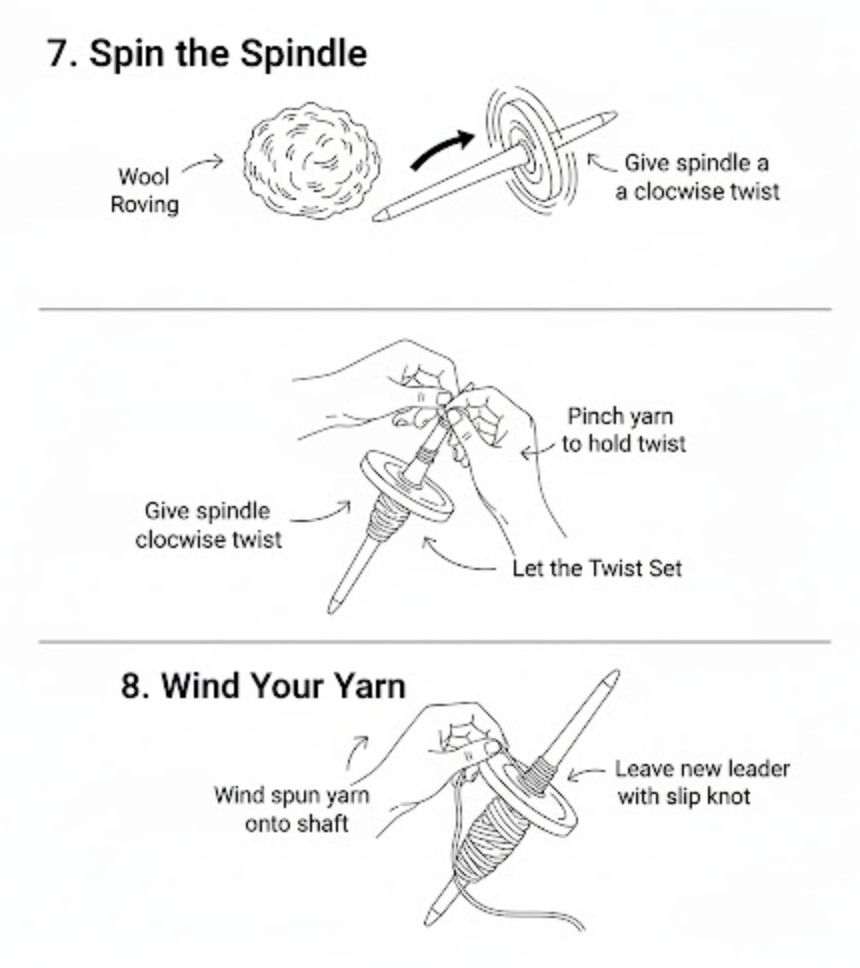
7. Spin the Spindle
Now for the exciting part! Give your spindle a good twist with your dominant hand, letting it hang and spin freely. As it spins, the twist will travel up the leader and into your drafted fiber.
As the spindle spins, the twist will accumulate in the fiber. You'll see the fibers "grabbing" onto each other, forming yarn. Once the spindle starts to slow down, gently pinch the newly spun yarn just above where the twist has ended, preventing more twist from entering the drafting zone.
8. Wind Your Yarn
When you have a few inches of spun yarn, stop the spindle. Undo the slip knot, and wind the spun yarn onto the shaft of the spindle, below the whorl. Wind the leader onto the shaft including some of the new yarn. Leave 8-10 inches of newly spun yarn to come up through the notch in the top whorl and through the hook to continue spinning.
Continue Spinning and Winding
Repeat steps 6 through 9! Draft, spin, let the twist set, and wind. You'll get into a rhythm. Don't worry if your yarn is lumpy, thin, or thick at first. That's completely normal for beginners, and it's all part of the charm of handspun yarn.
Tips for Success:
Relax: Tension in your hands will make drafting difficult. Try to keep your movements fluid.
Draft Slowly: Take your time with drafting. Consistency comes with practice.
Don't Over-twist (or Under-twist): If your yarn feels hard and kinky, it's over-twisted. If it falls apart easily, it's under-twisted. You'll develop a feel for the right amount of twist.
Practice, Practice, Practice: The more you spin, the more natural it will feel.
You're on your way to creating your own beautiful, unique yarn! Enjoy the process!